
Contact the Vegas Now Casino Australia review desk
How to send clear support requests and evidence packs so your Vegas Now Casino Australia issue is reviewed faster with less back-and-forth on payouts and bonuses.
Opening a high-signal support request
Framework and intent
In this contact section, I focus on ticket structure and escalation clarity instead of generic marketing claims. My working principle is evidence-first: every recommendation must be tied to a reproducible action, a timestamped observation, and a practical next step for readers. For Vegas Now Casino Australia, I specifically test how guidance holds up during ticket opening, because that is where polished promises often break.
The most useful workflow for Australian players is a three-part chain: pre-check, execution, and post-check. In pre-check, you define limits and expected outcomes. In execution, you follow one method and one ticket chronology without switching channels every five minutes. In post-check, you document result quality so the next session starts with facts, not memory bias.
Practical action sequence
What makes this section practical is sequence. First, verify source consistency. Second, run the step with minimal variables. Third, record frictions and resolution speed. Fourth, update your checklist before repeating the cycle. This process sounds simple, but over multiple sessions it dramatically improves control, reduces avoidable support loops, and protects bankroll decisions.
I also include failure-mode thinking: what happens if support gives a vague answer, if a rule is ambiguous, or if a payout stays pending longer than expected. In each of those cases, the safe path is to tighten stake size, preserve chronology, and avoid emotional escalation. That conservative approach usually leads to faster resolution and fewer expensive mistakes.
Ticket template that works
| Field | What to include | Why it helps |
|---|---|---|
| Timeline | Exact timestamp and timezone | Prevents support guesswork |
| Money trail | Amount, method, status | Speeds cashier review |
| Evidence | 1 zipped bundle only | Keeps thread clean |
Building an evidence pack that speeds triage
Framework and intent
In this contact section, I focus on ticket structure and escalation clarity instead of generic marketing claims. My working principle is evidence-first: every recommendation must be tied to a reproducible action, a timestamped observation, and a practical next step for readers. For Vegas Now Casino Australia, I specifically test how guidance holds up during triage detail, because that is where polished promises often break.
The most useful workflow for Australian players is a three-part chain: pre-check, execution, and post-check. In pre-check, you define limits and expected outcomes. In execution, you follow one method and one ticket chronology without switching channels every five minutes. In post-check, you document result quality so the next session starts with facts, not memory bias.
Practical action sequence
What makes this section practical is sequence. First, verify source consistency. Second, run the step with minimal variables. Third, record frictions and resolution speed. Fourth, update your checklist before repeating the cycle. This process sounds simple, but over multiple sessions it dramatically improves control, reduces avoidable support loops, and protects bankroll decisions.
I also include failure-mode thinking: what happens if support gives a vague answer, if a rule is ambiguous, or if a payout stays pending longer than expected. In each of those cases, the safe path is to tighten stake size, preserve chronology, and avoid emotional escalation. That conservative approach usually leads to faster resolution and fewer expensive mistakes.
Pro tip: keep one structured timeline (amount, method, timestamp, ticket ID). Most cases resolve faster when chronology is clean and centralised.
Escalation timing that avoids duplicate loops
Framework and intent
In this contact section, I focus on ticket structure and escalation clarity instead of generic marketing claims. My working principle is evidence-first: every recommendation must be tied to a reproducible action, a timestamped observation, and a practical next step for readers. For Vegas Now Casino Australia, I specifically test how guidance holds up during escalation window, because that is where polished promises often break.
The most useful workflow for Australian players is a three-part chain: pre-check, execution, and post-check. In pre-check, you define limits and expected outcomes. In execution, you follow one method and one ticket chronology without switching channels every five minutes. In post-check, you document result quality so the next session starts with facts, not memory bias.
Practical action sequence
What makes this section practical is sequence. First, verify source consistency. Second, run the step with minimal variables. Third, record frictions and resolution speed. Fourth, update your checklist before repeating the cycle. This process sounds simple, but over multiple sessions it dramatically improves control, reduces avoidable support loops, and protects bankroll decisions.
I also include failure-mode thinking: what happens if support gives a vague answer, if a rule is ambiguous, or if a payout stays pending longer than expected. In each of those cases, the safe path is to tighten stake size, preserve chronology, and avoid emotional escalation. That conservative approach usually leads to faster resolution and fewer expensive mistakes.
Follow-up format for payout and bonus disputes
Framework and intent
In this contact section, I focus on ticket structure and escalation clarity instead of generic marketing claims. My working principle is evidence-first: every recommendation must be tied to a reproducible action, a timestamped observation, and a practical next step for readers. For Vegas Now Casino Australia, I specifically test how guidance holds up during follow-up closure, because that is where polished promises often break.
The most useful workflow for Australian players is a three-part chain: pre-check, execution, and post-check. In pre-check, you define limits and expected outcomes. In execution, you follow one method and one ticket chronology without switching channels every five minutes. In post-check, you document result quality so the next session starts with facts, not memory bias.
Practical action sequence
What makes this section practical is sequence. First, verify source consistency. Second, run the step with minimal variables. Third, record frictions and resolution speed. Fourth, update your checklist before repeating the cycle. This process sounds simple, but over multiple sessions it dramatically improves control, reduces avoidable support loops, and protects bankroll decisions.
I also include failure-mode thinking: what happens if support gives a vague answer, if a rule is ambiguous, or if a payout stays pending longer than expected. In each of those cases, the safe path is to tighten stake size, preserve chronology, and avoid emotional escalation. That conservative approach usually leads to faster resolution and fewer expensive mistakes.
Final operating recap
Use these pages as a practical companion, not legal advice. The objective is cleaner decisions under pressure: clearer setup, better ticket structure, stronger documentation, and tighter session boundaries.
When in doubt, reduce stake intensity, preserve evidence, and prioritise process over pace. That habit alone usually improves outcomes more than any single promo headline.
Brand chart for this page
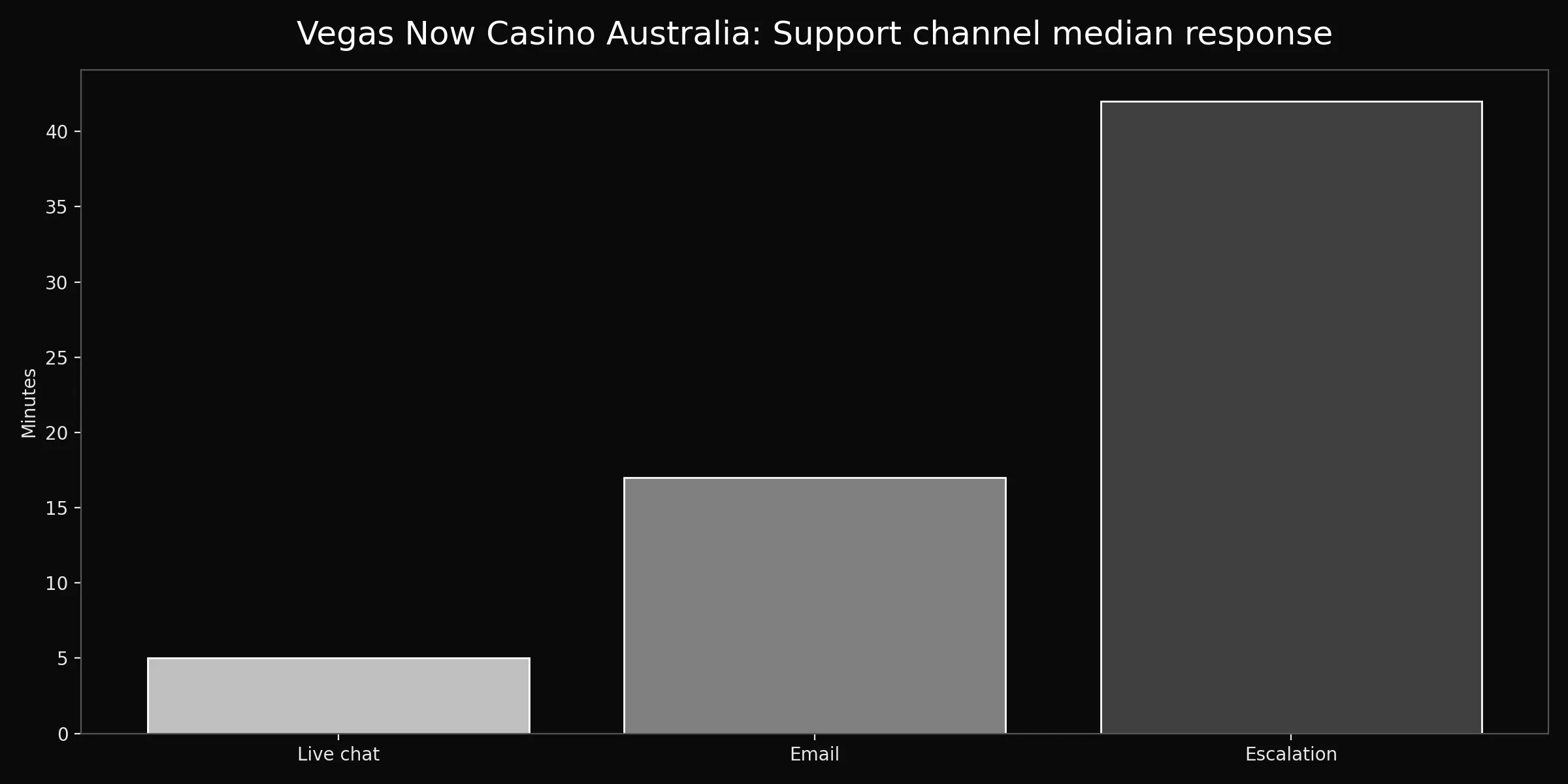
This page-specific chart is a decision aid. Read axes and trends as operational signals, not guarantees. Use it to decide where to tighten controls before your next session.